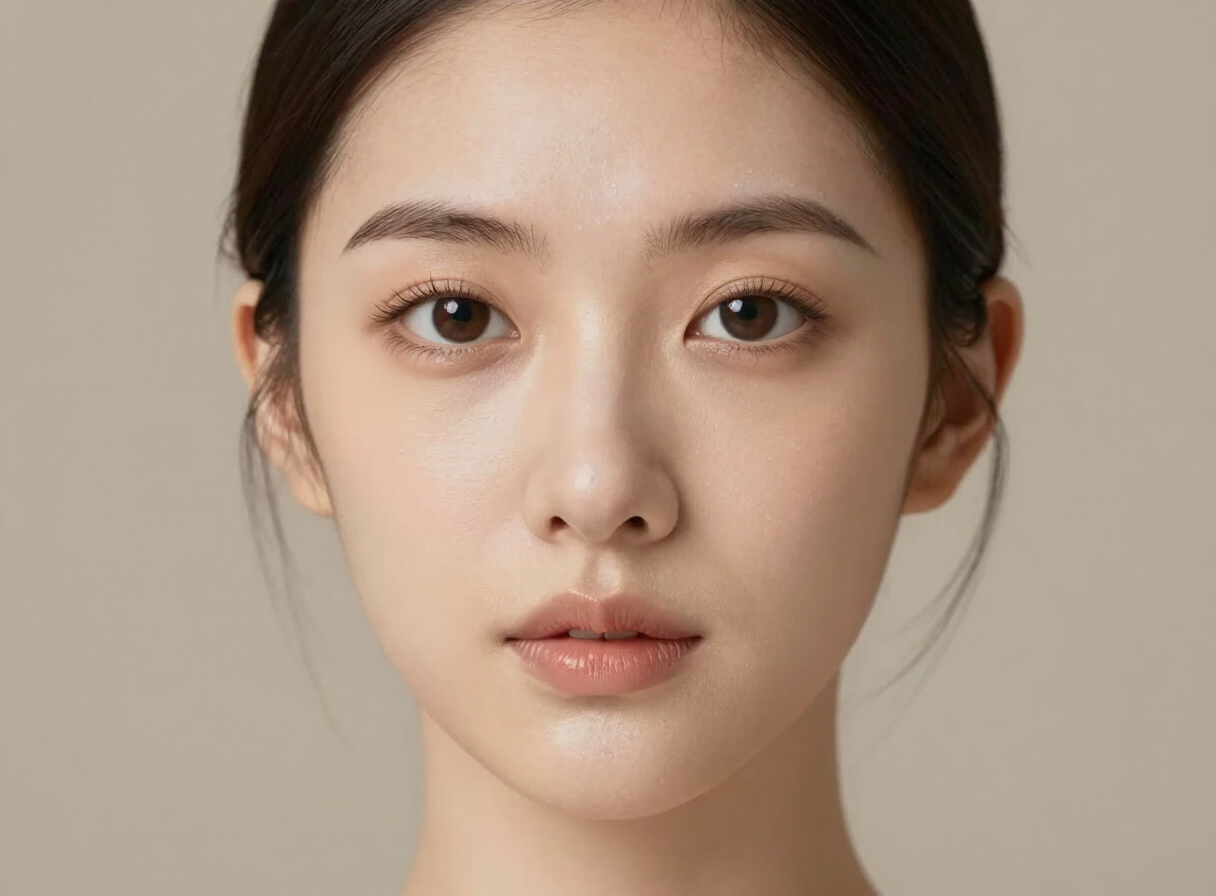
A natural-looking result is the quiet ambition behind most modern aesthetic surgery. Patients rarely ask to look like someone else; they ask to look rested, balanced and like themselves — only refreshed. Yet “natural” is one of the most misunderstood words in cosmetic surgery, because it is not a single shape, a single size or a universal ideal. It is the outcome of anatomical understanding, proportionate planning and restraint. This article explains why natural results depend on anatomy, balance and individualised surgical planning rather than on following a template.
What does a natural-looking result actually mean?
A natural result is one that sits comfortably within your own anatomy. It does not draw attention to itself, does not look “operated”, and remains consistent with your age, sex, build and ethnic features. Friends may notice that you look well, but they should struggle to pinpoint what has changed.
Importantly, natural does not mean invisible. A facelift that lifts descended tissues, a breast augmentation that restores volume, or a rhinoplasty that refines the nasal contour can all create a visible, welcome change. The distinction lies in whether the result harmonises with your existing features or competes with them.
Why facial and body proportions matter
The human eye reads beauty largely through proportion and relationship rather than through isolated features. A nose is not judged on its own but against the chin, the forehead and the midface; a breast is judged against the chest width, the waist and the hips. When proportions are respected, a result feels right even when the change is measurable.
Classical reference points — such as the facial thirds, the nasofacial angle or the relationship between waist and hip — are useful guides, not rules to impose. Dr. Cem Yıldırım uses them as a framework during assessment, then adjusts the plan to your individual measurements so that the outcome belongs to you rather than to a textbook.
The importance of individual anatomy
No two anatomies are identical. Skin thickness, fat distribution, muscle tone, bone structure, ligament strength and tissue elasticity all vary, and each one changes how a given technique will behave in a given person. Two patients requesting the same procedure can require quite different surgical plans.
This is why a thorough anatomical assessment comes before any surgical decision. Photographs, measurements and a physical examination reveal what is actually possible in your case, which techniques suit your tissues, and where the limits lie. Planning that ignores anatomy is the most common cause of results that look artificial.
Why aesthetic surgery is not one-size-fits-all
A one-size-fits-all approach treats every patient as the same canvas and applies the same operation, the same implant, the same lift vector. It is efficient for the surgeon but rarely flattering for the patient, because it ignores the very differences that make a result look natural.
Individualised planning inverts that logic. The procedure is selected and modified around your anatomy, your goals and your lifestyle. Sometimes that means a smaller change than you initially imagined; sometimes it means combining procedures or choosing a different technique altogether. The aim is the right operation for you, not the most operation possible.
Balance, symmetry and harmony
Balance and harmony describe how the parts of the face or body relate to one another after surgery. A refined result improves the whole, not just the treated area, so that no single feature dominates or looks out of place.
Symmetry is often discussed as a goal, but perfect symmetry is neither achievable nor necessary. Every face and body is naturally asymmetric, and chasing absolute symmetry can itself produce an unnatural appearance. The realistic aim is to reduce distracting asymmetry and restore a balanced, harmonious relationship between features — not to manufacture mathematical equality.
Preserving your individual characteristics
One of the greatest risks in aesthetic surgery is erasing the features that make a person recognisable. A nose that is over-reduced, a face that is over-tightened, or a breast that is over-enlarged can all leave a patient looking unlike themselves. Preservation of identity is therefore a central principle of natural results.
Dr. Cem Yıldırım treats your existing features as the starting point to be respected, not a problem to be erased. The goal is refinement that keeps your character intact — so that after healing, you still look like you, only more rested and more in proportion.
Natural results in facial surgery
In facial surgery, natural results come from repositioning deeper structures rather than pulling skin tight, and from refining features in proportion to the rest of the face. A deep plane facelift, for example, lifts the foundational layers so the skin redrapes without tension, avoiding the stretched look of older techniques.
The same principle applies to a neck lift that restores a clean jawline, or a rhinoplasty that refines the nose in harmony with the chin and midface. The common thread is anatomical precision and restraint — changing enough to refresh, not so much that the face loses its identity.
Natural results in breast surgery
In breast surgery, natural results depend on choosing size, shape and profile in relation to your chest width, tissue quality and body frame. An implant that is too wide or too large for your anatomy will look obvious regardless of surgical skill; a proportionate choice looks as though it always belonged.
The same logic guides a breast lift, where the goal is to restore a youthful position and shape without creating an exaggerated profile. Planning around your individual measurements, rather than around a generic ideal, is what allows the result to feel natural to your body.
Natural results in body contouring
In body contouring, natural results come from sculpting in harmony with your underlying frame and muscle, not from removing the maximum possible fat. The aim is a silhouette that looks athletic and proportionate, with smooth transitions between treated and untreated areas.
Procedures such as 360 liposuction illustrate this principle: refining the waist, flanks and abdomen together creates a balanced contour that no single area could achieve alone. As with the face and breast, the result looks natural because it respects your anatomy rather than overriding it.
The importance of realistic expectations
Realistic expectations are the foundation of a satisfying outcome. Surgery works within your anatomy, not outside it, and it cannot deliver the features of another person or stop the ageing process. Patients who understand what is achievable tend to be far happier with natural results than those chasing an idealised image.
An honest consultation makes this explicit. Dr. Cem Yıldırım discusses what surgery can and cannot do in your case, shows realistic examples, and is candid when a desired change would look unnatural or carry undue risk. Setting expectations clearly before surgery protects both the result and your confidence in it.
“The aim is not to make you look like someone else, but to return you to a balanced, rested version of yourself.”
Surgical planning and consultation
Natural results are decided before the operating room. During consultation, your anatomy is assessed, your goals are listened to, and a plan is built around both. Photographs and measurements support the discussion, and the proposed approach is explained in terms you can weigh and question.
This planning stage is also where technique, incision placement and the extent of intervention are matched to your tissues. A plan built on individual anatomy and honest expectations is what allows surgery to enhance your features rather than replace them — and it is the most reliable route to a result that looks natural and ages gracefully.
Frequently asked questions
What exactly is a natural-looking result?
A result that harmonises with your existing anatomy, age and features — visible enough to refresh your appearance, but not so pronounced that it looks operated or unlike you.
Can surgery give me perfect symmetry?
No. Every face and body is naturally asymmetric. Surgery can reduce distracting asymmetry and improve balance, but perfect symmetry is neither achievable nor necessary for a natural look.
Why is one-size-fits-all surgery a problem?
Because it ignores individual anatomy. The same implant, lift or technique that suits one person can look artificial on another. Natural results depend on a plan tailored to your measurements and tissues.
How does Dr. Cem Yıldırım plan for natural results?
Through a detailed anatomical assessment, clear discussion of your goals, and a surgical plan built around your individual proportions, tissue quality and realistic expectations.
Does a natural result mean a small result?
Not necessarily. Natural refers to harmony with your anatomy, not to the size of the change. A visible change can still look natural when it is proportionate and well planned.
Will I still look like myself after surgery?
That is the aim. Preserving your recognisable features is central to natural results; the goal is refinement that keeps your character intact rather than erasing it.
How do I know if my expectations are realistic?
An honest consultation is the best way. Your anatomy, the achievable change and the limits of surgery are discussed openly so you can decide with a clear understanding of what is possible.
A result that belongs to you
Natural-looking results are not the product of a single technique or a universal ideal. They come from anatomical understanding, proportionate planning, respect for your individual features and honest expectations. When surgery is built around you rather than around a template, the outcome tends to look balanced, age gracefully and remain unmistakably yours.
If you are considering a procedure, our pages on the Deep Plane Facelift
and Rhinoplasty
explain how these principles are applied in practice — and a private consultation is the place to discuss what they would mean for you.